

What Signs Indicate You May Need Bunion Treatment?
A visible bump alone does not necessarily mean treatment is required. Some people have bunions that remain relatively comfortable for years, while others develop increasing irritation as the toe gradually changes position. Symptoms can become more noticeable with prolonged standing, walking, exercise, or wearing certain shoes. At Arizona Foot and Ankle Physicians, our team looks at both the physical appearance of the bunion and the way it is affecting the patient’s foot function before discussing treatment options. For more information, contact us or request an appointment online. We are conveniently located at 11390 E. Via Linda, Ste 102, Scottsdale, AZ 85259.
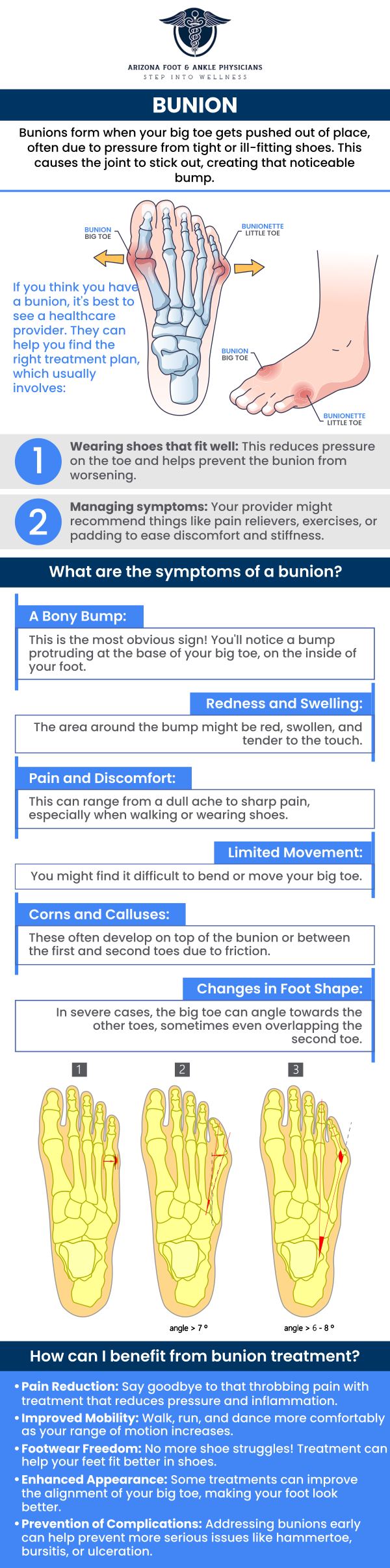
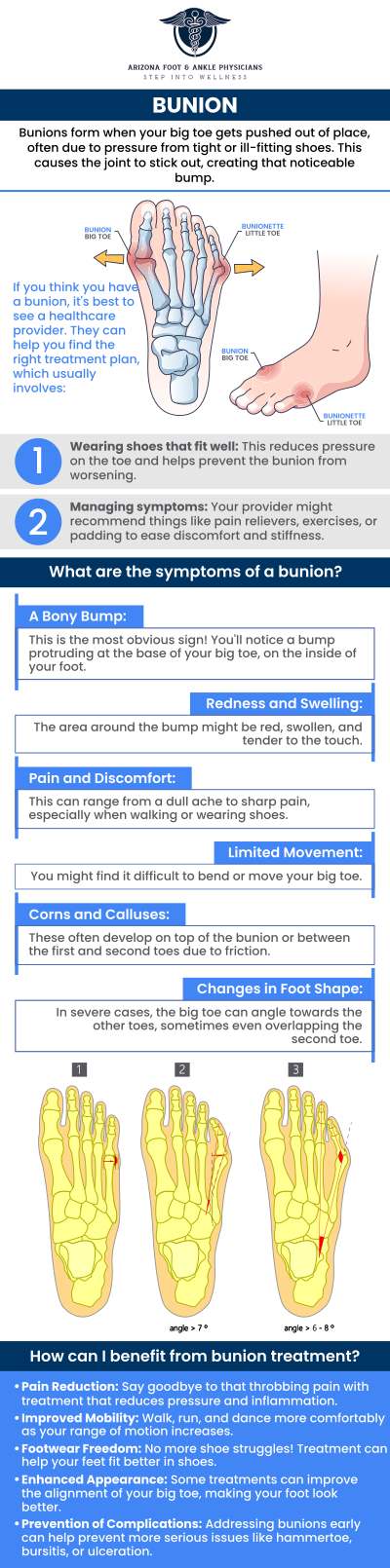
Table of Contents:
What are the common signs that you may need bunion treatment?
How can a bunion affect walking, footwear, and daily activities?
When should bunion symptoms be evaluated by a foot specialist?
Why is early evaluation important for ongoing bunion concerns?
How can Arizona Foot and Ankle Physicians help patients identify and manage bunion concerns with personalized treatment options?
Pain or tenderness around the base of the big toe is one of the more recognizable reasons people seek care. Other clues can include redness, swelling, thickened skin over the prominent joint, recurring irritation from footwear, or difficulty moving the big toe normally.
Changes in toe alignment can also create problems beyond the original bump. The big toe may gradually angle toward the neighboring toes, and pressure can develop between or beneath the toes. Persistent symptoms, rather than appearance alone, are an important reason to have the foot assessed.
At Arizona Foot and Ankle Physicians, our team can evaluate these changes and determine whether the bunion is causing a problem that warrants treatment.
As a bunion progresses, the altered position of the big toe can change how pressure is distributed across the foot. Walking for long periods may become uncomfortable, and activities that require repeated push-off through the toes can become more difficult.
Footwear can become another challenge. Shoes that previously fit comfortably may rub against the prominent joint or leave insufficient room around the toes. Some patients begin avoiding certain shoes, limiting exercise, or modifying daily routines simply to prevent irritation.
At Arizona Foot and Ankle Physicians, our team considers these practical effects when determining how significantly a bunion is affecting a patient’s daily life.
An evaluation is reasonable when bunion discomfort becomes persistent, begins interfering with normal activities, or makes finding comfortable footwear increasingly difficult. It is also worth seeking assessment when the toe appears to be changing position or when symptoms continue despite adjustments such as wearing roomier shoes.
Waiting until the discomfort becomes severe is not necessary. A foot specialist can assess the deformity and determine whether observation, conservative measures, or another form of treatment is appropriate based on the current condition.
At Arizona Foot and Ankle Physicians, our team evaluates bunion symptoms in the context of the patient’s foot structure, activity level, and functional concerns.
Bunions involve changes in the alignment of the big toe and the structures surrounding its joint. While evaluation does not necessarily mean that surgery or another major intervention is needed, understanding the condition earlier can help patients make informed decisions about foot care.
An assessment can also identify associated concerns, such as irritation of the skin, problems involving neighboring toes, or changes in how the patient bears weight while walking. Monitoring the condition provides an opportunity to recognize meaningful changes rather than relying only on how the bunion looks.
At Arizona Foot and Ankle Physicians, our team can establish an understanding of the patient’s current foot condition and provide guidance appropriate to the severity of the bunion.
Our team begins by determining what the bunion is actually doing to the patient’s foot. The evaluation can include the appearance and alignment of the big toe, joint mobility, areas of tenderness, walking mechanics, footwear concerns, and the effect of symptoms on normal activities. Imaging may also be considered when information about bone alignment is needed.
Treatment recommendations depend on those findings. Depending on the situation, management may involve changes in footwear, activity adjustments, supportive measures, or discussion of surgical correction when symptoms and deformity make it appropriate. The presence of a bunion does not automatically mean that surgery is necessary.
At Arizona Foot and Ankle Physicians, our team provides individualized bunion evaluation and treatment guidance, helping patients understand their foot condition and choose an approach suited to their symptoms, mobility needs, and overall foot health. For more information, contact us or request an appointment online. We are conveniently located at 11390 E. Via Linda, Ste 102, Scottsdale, AZ 85259. We serve patients from Scottsdale AZ, Fountain Hills AZ, Paradise Valley AZ, Carefree AZ, Rio Verde AZ, and surrounding areas.
Check Out Our 5 Star Reviews


ADDITIONAL SERVICES YOU MAY NEED
• Diabetic Foot Care
• Fungal Nails
• Heel Pain
• Bunions
• Ingrown Toenail
• Achilles Tendon
• Ankle Sprains
• Arthritis Foot
• Athlete’s Foot
• Corns And Calluses
• Crush Injury
• Flat Feet
• Geriatric Foot Care
• Hammertoes

ADDITIONAL SERVICES YOU MAY NEED
• Diabetic Foot Care
• Fungal Nails
• Heel Pain
• Bunions
• Ingrown Toenail
• Achilles Tendon
• Ankle Sprains
• Arthritis Foot
• Athlete’s Foot
• Corns And Calluses
• Crush Injury
• Flat Feet
• Geriatric Foot Care
• Hammertoes


 Send Text
 How May I Help You?