

Understanding Warts: Causes, Symptoms, and Effective Treatments
At Arizona Foot and Ankle Physicians in Scottsdale, AZ, Dr. Nathan Plaskey, DPM, offers comprehensive care to help you understand warts and the best ways to treat them. Warts are caused by the human papillomavirus (HPV) and can appear on various parts of the body, including feet and hands. We provide effective treatments, including cryotherapy, topical treatments, and surgical removal, to ensure rapid recovery and prevent recurrence. Our team will guide you through prevention strategies to keep warts from coming back. For more information, contact us or request an appointment online. We are conveniently located at 11390 E. Via Linda, Ste 102, Scottsdale, AZ 85259.
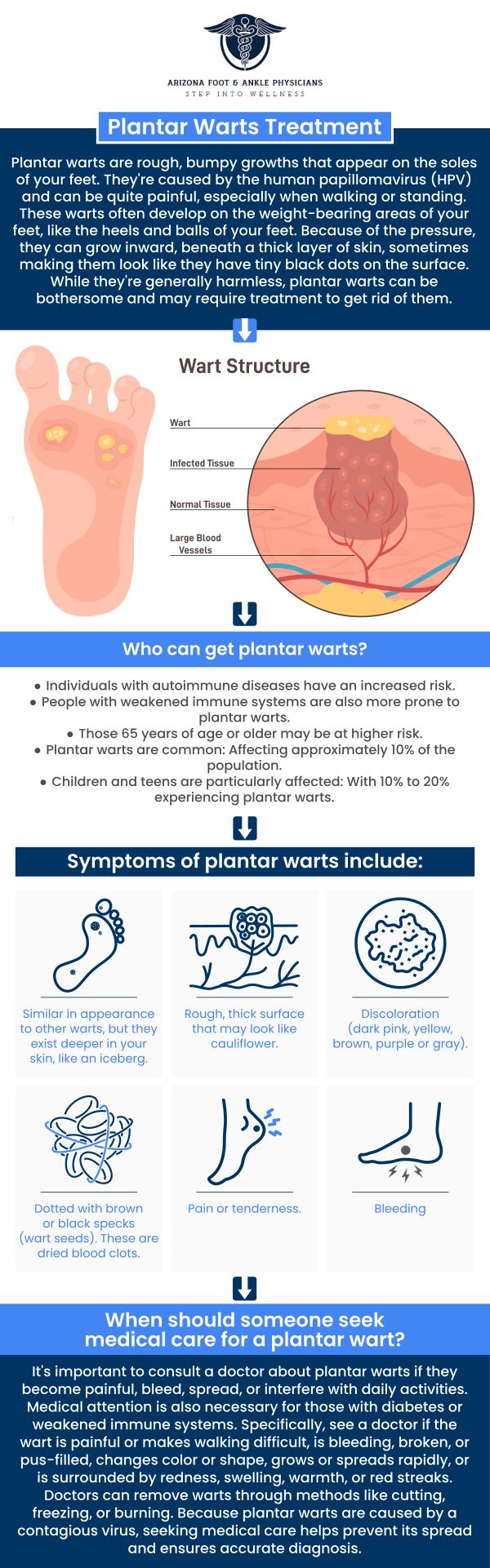
Table of Contents:
What causes warts to form?
How do I know if I have a wart or something else?
What are the treatment options for warts?
Are warts contagious?
Recognizing and Treating Warts at Arizona Foot and Ankle Physicians
Warts are small, often rough‑textured growths on the skin that are caused by certain strains of the human papillomavirus (HPV). This virus infects the top layer of the skin — usually through a tiny cut, scrape, or abrasion — and triggers accelerated cell growth, which results in the raised bump we know as a wart.
There are many strains of HPV, and each tends to be associated with specific types of warts. For example, plantar warts occur on the soles of the feet, common warts typically appear on hands and fingers, and flat warts are smaller and smoother, often appearing on the face or legs.
HPV thrives in warm, moist environments—such as locker rooms, indoor pools, and communal showers—which is why warts are commonly acquired in places where people walk barefoot or share surfaces. While HPV is widespread, not everyone exposed to the virus develops warts; genetics, immune system strength, and skin integrity all play a role in susceptibility.
At Arizona Foot and Ankle Physicians PLLC, clinicians often see plantar warts because the pressure points on the foot make it easier for the virus to penetrate and establish an infection.
Recognizing a wart can be tricky because other skin conditions — such as calluses, corns, cysts, or even skin cancer — may sometimes look similar. However, there are characteristic features that can help differentiate warts from other lesions:
Features commonly seen with warts
● Rough, grainy texture: Warts often feel like rough patches of skin.
● Tiny black dots: These are sometimes visible on the surface; they are clotted blood vessels, not “seeds.”
● Interruptions in skin lines: When you look at skin lines on the foot or hand, warts often disrupt these patterns.
● Tenderness with pressure: Plantar warts can be painful when squeezed from the sides or when bearing weight.
Features more typical of calluses or corns
● Smooth, thickened areas of skin
● Uniform discoloration
● Pain typically with direct pressure, not side pressure
When it might be something else
● Rapid growth
● Changing color or shape
● Bleeding that doesn’t resolve
● Lesions that don’t improve with normal care
If you aren’t sure, a professional evaluation is important. Providers at Arizona Foot and Ankle Physicians use clinical examination—and sometimes dermoscopy or biopsy—to confirm the diagnosis and rule out other conditions.
There are several effective ways to treat warts, and the right option depends on factors such as wart location, size, number of warts, and how long they’ve been present. Some warts go away on their own over time as the immune system clears the infection, but many require intervention—especially when they cause pain, spread, or persist.
Here are common treatment approaches:
1. Topical therapies
Over‑the‑counter or prescription creams containing salicylic acid help dissolve the thickened skin layers that make up a wart. These treatments require consistent application over weeks and are often effective for small, superficial warts.
2. Cryotherapy
Freezing the wart with liquid nitrogen is a commonly used method. The intense cold destroys virus‑infected skin and triggers an immune response that can help clear the lesion. Multiple sessions may be needed.
3. Laser therapy
Some stubborn warts respond well to laser treatments, which use focused light to destroy affected tissue.
4. Minor surgical removal
For larger or treatment‑resistant warts, minor excision may be performed in the office. This is usually done under local anesthesia to minimize discomfort.
At Arizona Foot and Ankle Physicians, the clinicians tailor treatment plans based on your specific condition, lifestyle, and treatment preferences. They may also recommend protective footwear, regular monitoring, and preventative measures to reduce the chance of recurrence.
Yes — warts are contagious, but they don’t spread the same way a cold virus does. The virus is transmitted through direct skin‑to‑skin contact, or indirectly by touching surfaces contaminated with the virus, especially in warm, moist environments.
Here are ways warts can spread:
● Walking barefoot on floors where HPV is present (e.g., public showers, gym locker rooms)
● Sharing towels or footwear with someone who has warts
● Touching a wart and then touching another part of your body
● Nail biting or picking at existing warts, which can spread the virus to nearby skin
Warts can spread from person to person — but not everyone exposed to HPV will develop warts. Factors such as skin breaks and immune system strength influence whether the virus takes hold.
To reduce contagious spread:
● Avoid sharing personal items (towels, shoes)
● Don’t pick or scratch warts
● Keep feet clean and dry
● Wear footwear in communal wet areas
Understanding contagiousness helps patients take preventive steps and protect others in their household or community.
Warts may appear harmless at first, especially common warts on the hands or small plantar warts on the feet, but they can cause discomfort, interfere with walking, or spread if left untreated. At Arizona Foot and Ankle Physicians PLLC, experienced providers work with patients to correctly identify, diagnose, and treat warts using evidence‑based methods tailored to individual needs.
Here’s how the process typically works:
Evaluation and Diagnosis
A clinician examines the lesion, looking for hallmark wart characteristics such as rough texture, small black dots, and disruption of natural skin lines. When the diagnosis is uncertain, additional examination tools or biopsy can be used to confirm what type of lesion is present.
Treatment Planning
Once a wart is identified, the provider discusses treatment options — from conservative topical care to more advanced therapies. Factors such as pain level, wart size, number of warts, and patient preference help guide the plan.
Active Treatment
Depending on the chosen method, treatments may be administered in the office or recommended as a self‑care regimen. Many patients experience noticeable improvement within a few weeks of consistent care.
Follow‑Up and Prevention
Providers offer guidance on how to reduce the risk of recurrence, including proper foot care, hygiene advice, and lifestyle modifications that support immune health.
Warts are common, but they don’t have to linger or limit your comfort. With expert evaluation and individualized treatment from providers who understand foot and skin conditions—like those at Arizona Foot and Ankle Physicians—you can find relief and reduce the chance of future outbreaks. For more information, contact us or request an appointment online. We are conveniently located at 11390 E. Via Linda, Ste 102, Scottsdale, AZ 85259. We serve patients from Scottsdale AZ, Fountain Hills AZ, Paradise Valley Az, Carefree AZ, Rio Verde AZ, and surrounding areas.
Check Out Our 5 Star Reviews


ADDITIONAL SERVICES YOU MAY NEED
• Diabetic Foot Care
• Fungal Nails
• Heel Pain
• Bunions
• Ingrown Toenail
• Achilles Tendon
• Ankle Sprains
• Arthritis Foot
• Athlete’s Foot
• Corns And Calluses
• Crush Injury
• Flat Feet
• Geriatric Foot Care
• Hammertoes

ADDITIONAL SERVICES YOU MAY NEED
• Diabetic Foot Care
• Fungal Nails
• Heel Pain
• Bunions
• Ingrown Toenail
• Achilles Tendon
• Ankle Sprains
• Arthritis Foot
• Athlete’s Foot
• Corns And Calluses
• Crush Injury
• Flat Feet
• Geriatric Foot Care
• Hammertoes


 Send Text
 How May I Help You?