

Understanding Plantar Fasciitis: Causes, Symptoms, and Treatment Options
At Arizona Foot and Ankle Physicians in Scottsdale, AZ, Dr. Nathan Plaskey, DPM, specializes in diagnosing and treating plantar fasciitis, a common cause of heel pain. Plantar fasciitis occurs when the band of tissue that supports the arch of the foot becomes inflamed. Our team provides personalized treatment options, including physical therapy, custom orthotics, and minimally invasive surgery if necessary, to help you recover and get back to your daily activities. For more information, contact us or request an appointment online. We are conveniently located at 11390 E. Via Linda, Ste 102, Scottsdale, AZ 85259.
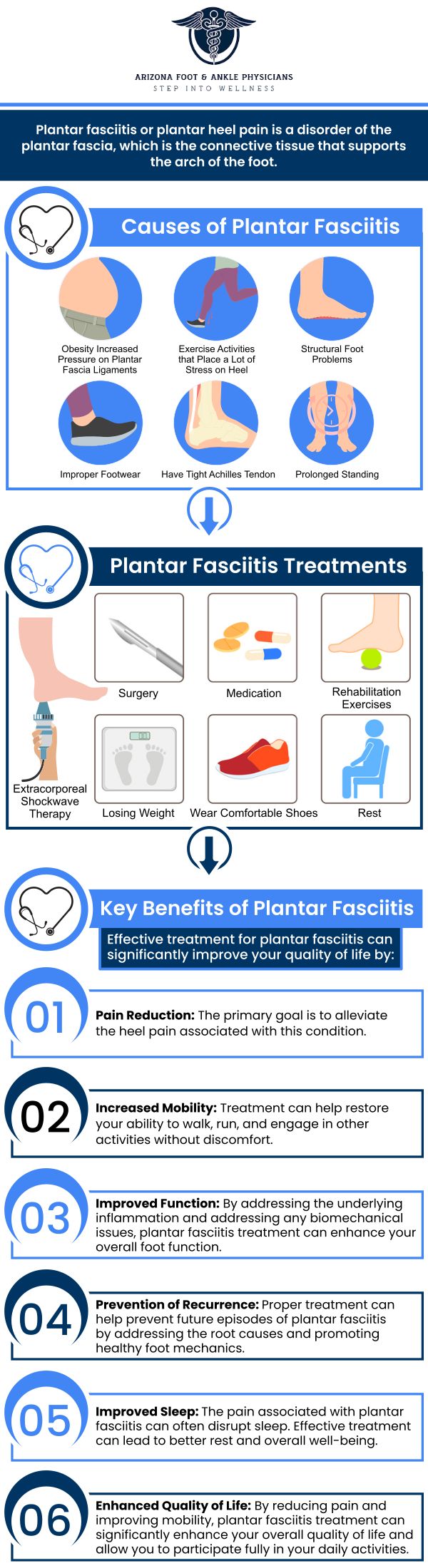
Table of Contents:
What causes plantar fasciitis?
What treatments are available for plantar fasciitis?
Can plantar fasciitis be prevented?
What are the symptoms of plantar fasciitis?
Plantar Fasciitis Treatment at Arizona Foot and Ankle Physicians
Plantar fasciitis is one of the most common causes of heel pain, and it develops when the plantar fascia—a thick band of connective tissue running along the bottom of the foot from the heel to the toes—becomes irritated or inflamed. At Arizona Foot and Ankle Physicians, many patients come in struggling with this condition because it can develop gradually and become quite persistent if not addressed.
Although the exact reason plantar fasciitis starts may vary from person to person, the condition most often arises due to repeated stress and strain on the plantar fascia. This stress causes tiny tears in the tissue, which leads to inflammation and pain. Common contributors include:
• Overuse from physical activity (especially high‑impact sports like running, jumping, or prolonged walking)
• Poor footwear choices, such as shoes without adequate arch support or cushioning
• Sudden increases in activity level
• Excess body weight, placing additional pressure on the plantar fascia
• Tight Achilles tendon or calf muscles, which can pull on the heel and strain the plantar fascia
• Flat feet or very high arches, which affect how weight is distributed across the foot
In many cases, several of these factors combine to create stress that the plantar fascia cannot tolerate indefinitely, resulting in irritation and pain at its attachment point on the heel bone.
Fortunately, most cases of plantar fasciitis improve with conservative, nonsurgical treatments when they’re tailored to the individual’s symptoms and lifestyle. At Arizona Foot and Ankle Physicians, treatments focus on reducing inflammation, relieving pain, and correcting the underlying foot mechanics that contribute to repetitive stress.
Here are some commonly used treatment options:
1. Activity Modification
Resting from high‑impact activities and switching to lower‑impact exercises (like swimming or cycling) can reduce ongoing irritation.
2. Stretching and Strengthening
Targeted stretching of the calf muscles, Achilles tendon, and plantar fascia itself helps improve flexibility and reduces tension on the heel. Strengthening exercises for foot and lower leg muscles also support better biomechanics.
3. Supportive Footwear and Orthotics
Shoes with good arch support and cushioning help redistribute pressure across the foot. Custom orthotic inserts or over‑the‑counter arch supports can correct structural issues like flat feet or high arches, reducing strain on the plantar fascia.
4. Physical Therapy
A physical therapist evaluates the gait and foot mechanics, then guides patients through exercises and modalities that promote healing and prevent recurrence.
5. Night Splints
Wearing a night splint keeps the foot gently flexed while sleeping, preventing the plantar fascia from tightening overnight and reducing morning pain.
6. Anti‑Inflammatory Treatments
Topical or oral anti‑inflammatory medications may be recommended briefly to reduce pain and swelling.
Most people see meaningful improvement in symptoms with these approaches when they are followed consistently. Persistent or severe cases can be evaluated for additional interventions if needed.
Yes — while not every case of plantar fasciitis can be prevented, many risk factors can be managed to reduce the likelihood of developing it. Prevention strategies focus on minimizing repetitive stress and improving foot function. Here are practical ways to help prevent plantar fasciitis:
Choose Supportive Footwear
Shoes with proper arch support, heel cushioning, and a comfortable fit help absorb shock and reduce strain on the plantar fascia. Avoid walking barefoot on hard surfaces for extended periods.
Warm Up Before Activity
If you run or participate in high‑impact sports, warming up before workouts and cooling down afterward can reduce sudden stress on the feet.
Gradually Increase Activity Levels
Increase the intensity, duration, or frequency of exercise slowly over time to allow the body to adapt.
Stretch Regularly
Daily stretching of calves, the Achilles tendon, and the plantar fascia improves flexibility and reduces tension. Incorporate stretches before and after physical activity.
Maintain a Healthy Weight
Reducing excess body weight can lower the load placed on the plantar fascia with each step.
Cross‑Train
Alternating high‑impact activities with lower‑impact ones, such as swimming or cycling, decreases repetitive stress.
By adopting these habits, individuals can help reduce the risk of plantar fasciitis or prevent symptoms from flaring once they’ve begun.
Plantar fasciitis has several hallmark symptoms that make it distinct from other types of foot pain. Most patients at Arizona Foot and Ankle Physicians describe a combination of the following:
Heel Pain
The most classic symptom is pain at or near the bottom of the heel. This pain often feels sharp or stabbing, especially with the first steps in the morning or after sitting for a long time.
Pain After Activity
Pain may decrease during activity but return afterward, particularly after prolonged standing or intense exercise.
Tenderness to Touch
There may be localized tenderness when touching the heel or along the arch where the plantar fascia attaches.
Pain That Worsens Over Time
If left untreated, the pain can become more persistent and less responsive to simple rest.
Plantar fasciitis pain is often most noticeable upon waking or after rest, because the plantar fascia tightens overnight and then stretches suddenly with the first steps of the day. Over time, this pattern of pain and stiffness can interfere with daily routines and exercise.
At Arizona Foot and Ankle Physicians PLLC, our specialists are experienced in diagnosing and treating heel pain, including plantar fasciitis. The first step in care is a thorough evaluation to confirm the diagnosis and rule out other causes of heel pain, such as Achilles tendinopathy, stress fractures, or nerve entrapments.
Once plantar fasciitis is confirmed, a personalized treatment plan is developed based on:
• The severity of symptoms
• The patient’s activity level
• Gait and foot mechanics
• Lifestyle and job demands
• Medical history
This individualized approach ensures that treatment is both effective and sustainable. Early intervention often leads to faster relief, so patients are encouraged to seek evaluation if heel pain persists beyond a few days or interferes with normal walking.
Common components of treatment include therapeutic exercises, footwear recommendations, orthotics when appropriate, and modalities designed to reduce inflammation and promote healing. Education on proper foot care and activity modification also plays a key role in achieving lasting improvement.
By combining evidence‑based therapies with personalized care, Arizona Foot and Ankle Physicians helps patients get back on their feet with less pain and better function. For more information, contact us or request an appointment online. We are conveniently located at 11390 E. Via Linda, Ste 102, Scottsdale, AZ 85259. We serve patients from Scottsdale AZ, Fountain Hills AZ, Paradise Valley Az, Carefree AZ, Rio Verde AZ, and surrounding areas.
Check Out Our 5 Star Reviews


ADDITIONAL SERVICES YOU MAY NEED
• Diabetic Foot Care
• Fungal Nails
• Heel Pain
• Bunions
• Ingrown Toenail
• Achilles Tendon
• Ankle Sprains
• Arthritis Foot
• Athlete’s Foot
• Corns And Calluses
• Crush Injury
• Flat Feet
• Geriatric Foot Care
• Hammertoes

ADDITIONAL SERVICES YOU MAY NEED
• Diabetic Foot Care
• Fungal Nails
• Heel Pain
• Bunions
• Ingrown Toenail
• Achilles Tendon
• Ankle Sprains
• Arthritis Foot
• Athlete’s Foot
• Corns And Calluses
• Crush Injury
• Flat Feet
• Geriatric Foot Care
• Hammertoes


 Send Text
 How May I Help You?