

When is it Important to See a Doctor for Wart Removal in Fountain Hills, AZ?
Warts that become painful, spread, bleed, change in appearance, interfere with walking, or fail to improve with home care should be evaluated by a qualified foot specialist. At Arizona Foot and Ankle Physicians, Dr. Nathan K. Plaskey, DPM, D.ABFAS, carefully examines the affected area, confirms the diagnosis, and recommends a personalized treatment approach based on the wart’s size, location, and severity to support safe removal, healthier skin, and improved foot comfort. For more information, contact us or request an appointment online. We are conveniently located at 11390 E. Via Linda, Ste 102, Scottsdale, AZ 85259.
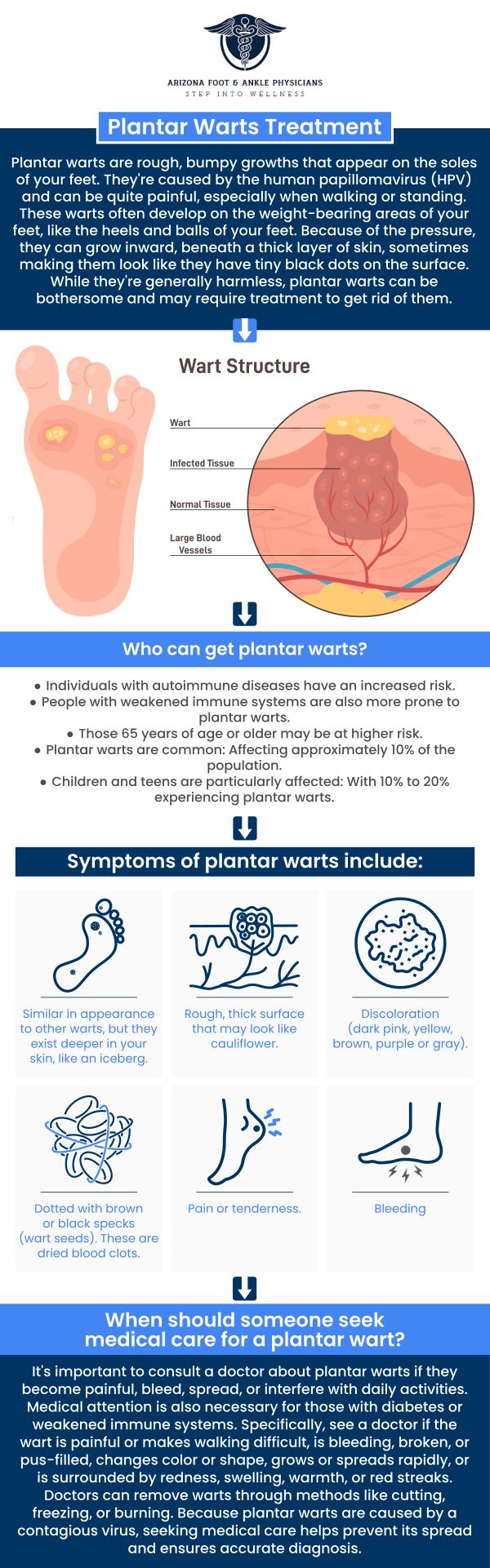
Table of Contents:
When should a wart be evaluated by a foot and ankle specialist?
What are the signs that a wart may need professional treatment?
Can untreated warts spread or become more difficult to remove?
What wart removal treatments are available at a podiatry clinic?
What can patients expect during a wart removal appointment?
How can Arizona Foot and Ankle Physicians provide personalized wart removal treatment and foot care support for patients in Fountain Hills, AZ?
A wart should be evaluated when it causes pain, tenderness, bleeding, itching, or difficulty standing and walking. Professional assessment is also important when the growth changes in size, shape, or color, returns after treatment, or begins spreading across the foot. These symptoms may indicate that the wart requires targeted care rather than continued home treatment.
Patients should also seek an evaluation when they are uncertain whether a growth is a wart. Plantar warts can resemble corns, calluses, and other skin conditions, but their causes and treatment needs differ. A foot and ankle specialist can inspect the growth, evaluate its texture and location, and determine whether additional testing is necessary to confirm the diagnosis.
People with diabetes, reduced sensation in their feet, circulation concerns, or a weakened immune system should avoid attempting aggressive wart removal at home without medical guidance. Arizona Foot and Ankle Physicians can evaluate the growth and recommend care that considers the patient’s foot health, symptoms, and individual risk factors.
A wart may need professional treatment when it becomes painful under pressure, interferes with normal movement, or develops in an area that repeatedly rubs against a shoe. Plantar warts commonly form on weight-bearing areas, including the heel and ball of the foot, where pressure can force the growth beneath a thick layer of skin, increasing discomfort.
Other warning signs include bleeding, rapid growth, persistent itching, changes in color or shape, and the development of multiple nearby growths. A wart that does not improve after careful home treatment, repeatedly returns, or continues to spread should also be examined. An evaluation helps confirm that the growth is truly a wart and not another condition requiring different care.
Our team can assess stubborn or uncomfortable foot warts and determine whether professional treatment is appropriate. The care plan may consider the wart’s size, depth, location, duration, previous treatments, and effect on walking or daily activities.
Warts are caused by certain strains of the human papillomavirus, which can enter the skin through small cuts or weakened areas. The virus may spread from one part of the foot to another through touching, scratching, or using the same grooming tools on affected and healthy skin. Contact with contaminated personal items and warm, moist surfaces may also contribute to transmission.
An untreated wart may remain for months or years, enlarge, or form a cluster known as mosaic warts. Larger, deeper, or clustered warts may require more time and repeated treatment sessions to resolve. Treating a wart while it is smaller and limited to one area may help reduce discomfort and lower the chance of additional growths developing.
Patients should avoid picking, cutting, or scratching a wart because doing so may irritate the skin and spread the virus. Arizona Foot and Ankle Physicians can provide guidance on appropriate treatment, foot hygiene, pressure reduction, and practical measures that may help limit recurrence or transmission.
Treatment options depend on the wart’s location, depth, size, number, and response to previous care. Our team may recommend a topical treatment that gradually removes thickened wart tissue or an in-office freezing procedure that destroys affected tissue. Some patients need multiple applications or appointments because plantar warts can extend beneath the visible surface of the skin.
For resistant warts, additional options may include blistering agents, laser therapy, electrocautery, immune-based treatment, or surgical removal. Not every approach is appropriate for every patient, and the services available may vary between practices. Our team should consider skin condition, medical history, pain level, and healing ability before recommending a procedure.
Arizona Foot and Ankle Physicians can examine the affected area and discuss treatment options suited to the patient’s needs. The goal is to remove or reduce the wart while protecting nearby healthy tissue, improving comfort, and supporting safe healing.
During the appointment, our team will ask when the growth first appeared, whether it has changed, and which treatments have already been attempted. Patients should mention pain, bleeding, spreading, recurring growths, diabetes, circulation problems, reduced foot sensation, or immune system concerns because these factors may influence the treatment plan.
Our team will closely examine the growth and surrounding skin. Plantar warts are often identified by their rough surface, interrupted skin lines, thickened covering, or tiny clotted blood vessels. In uncertain cases, a small amount of surface tissue may be removed for closer inspection, or a sample may be sent for laboratory evaluation to rule out another skin condition.
If treatment is performed, patients will receive instructions for protecting the area and managing expected changes such as tenderness, crusting, or blistering. Arizona Foot and Ankle Physicians can also explain whether follow-up visits are needed, since some warts require more than one treatment session for satisfactory clearance.
Personalized wart care begins with confirming the diagnosis and understanding how the growth affects the patient’s comfort, mobility, and daily routine. Our team can evaluate the wart’s appearance, size, depth, location, and duration while checking for surrounding irritation, infection, or additional growths.
Treatment recommendations may be adjusted according to the patient’s age, medical history, skin sensitivity, healing ability, and previous response to wart care. A small surface wart may require a different approach than a deep plantar wart located beneath a pressure point. Patients with diabetes, reduced sensation, or immune system concerns may also require additional precautions.
Arizona Foot and Ankle Physicians can provide Fountain Hills patients with individualized evaluation, appropriate removal options, follow-up care, and guidance for protecting their feet. Ongoing support may include monitoring healing, reducing pressure on the treated area, and discussing hygiene practices that may help prevent spreading or recurrence. For more information, contact us or request an appointment online. We are conveniently located at 11390 E. Via Linda, Ste 102, Scottsdale, AZ 85259. We serve patients from Scottsdale, Fountain Hills AZ, Paradise Valley AZ, Carefree AZ, Rio Verde AZ, and surrounding areas.
Check Out Our 5 Star Reviews


ADDITIONAL SERVICES YOU MAY NEED
• Diabetic Foot Care
• Fungal Nails
• Heel Pain
• Bunions
• Ingrown Toenail
• Achilles Tendon
• Ankle Sprains
• Arthritis Foot
• Athlete’s Foot
• Corns And Calluses
• Crush Injury
• Flat Feet
• Geriatric Foot Care
• Hammertoes

ADDITIONAL SERVICES YOU MAY NEED
• Diabetic Foot Care
• Fungal Nails
• Heel Pain
• Bunions
• Ingrown Toenail
• Achilles Tendon
• Ankle Sprains
• Arthritis Foot
• Athlete’s Foot
• Corns And Calluses
• Crush Injury
• Flat Feet
• Geriatric Foot Care
• Hammertoes


 Send Text
 How May I Help You?