

How Long Does It Take to Remove a Wart?
At Arizona Foot and Ankle Physicians, Dr. Nathan K. Plaskey, DPM, D.ABFAS, evaluates each wart based on its size, location, depth, and response to treatment. Some warts may improve after a single procedure, while others may require several treatment sessions over multiple weeks. A personalized examination helps determine the most appropriate removal method and expected healing timeline. Follow-up visits may be recommended to monitor progress and reduce the chance of the wart returning. Patients also receive guidance on protecting the treated area and supporting a smooth recovery. For more information, contact us or request an appointment online. We are conveniently located at 11390 E. Via Linda, Ste 102, Scottsdale, AZ 85259.
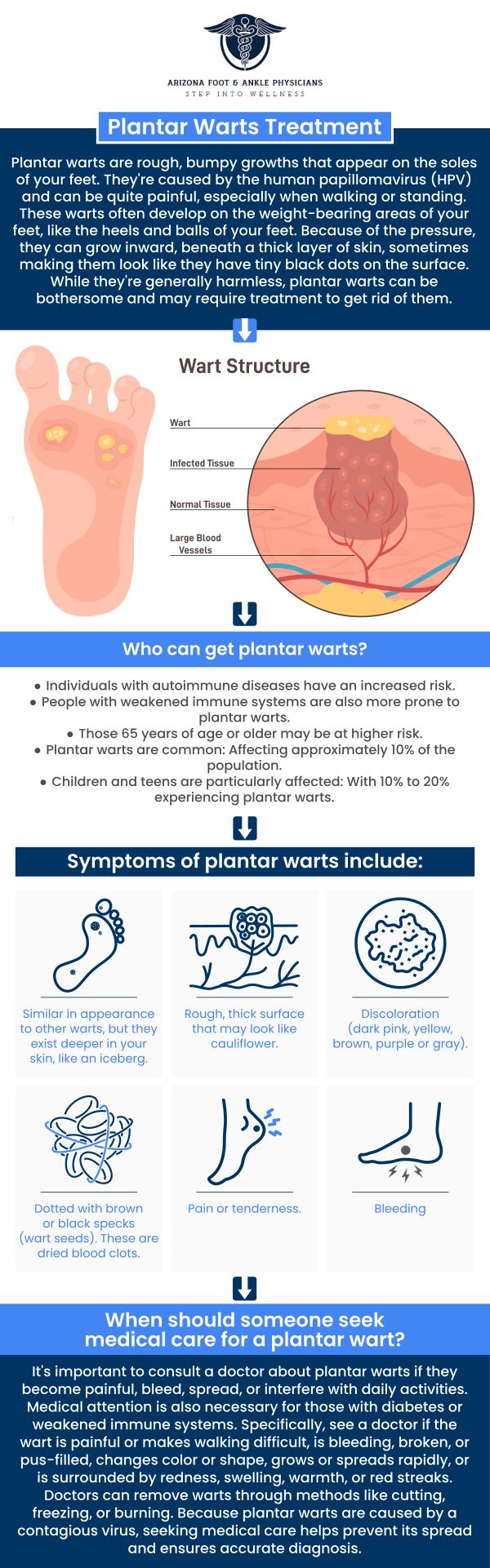
Table of Contents:
What causes warts to develop on the skin?
How are warts diagnosed by a healthcare provider?
What factors affect how long wart removal takes?
What wart treatment options are available for different types of warts?
How can proper foot care help prevent warts from returning?
How can Arizona Foot and Ankle Physicians help patients receive effective wart evaluation and removal care?
Warts develop when certain strains of the human papillomavirus, or HPV, enter the outer layer of the skin. The virus can stimulate rapid skin-cell growth, creating a rough, raised, or thickened area. Warts may occur anywhere, but plantar warts specifically develop on the soles of the feet.
HPV can enter through small cuts, cracks, or other weakened areas of the skin. It may spread through direct contact with a wart or indirectly through contaminated surfaces, including damp floors in locker rooms, pools, and communal showers. Walking barefoot in these environments may increase exposure.
Not everyone exposed to HPV develops a wart because immune responses vary among individuals. Children, people with weakened immune systems, and those with damaged or frequently moist skin may be more susceptible. Arizona Foot and Ankle Physicians can examine unusual foot growths and determine whether they are consistent with plantar warts.
Our team can often diagnose a wart by examining its appearance, texture, location, and growth pattern. Plantar warts may appear rough or grainy, interrupt the skin’s natural lines, and contain tiny dark spots caused by clotted blood vessels. Pressure from standing and walking can sometimes push the growth inward beneath a thick callus.
During the examination, our team may gently remove a small amount of hardened surface skin to look for characteristic pinpoint bleeding or dark dots. The surrounding skin may also be evaluated for tenderness, additional growths, or signs of another condition. Patients should explain when the growth appeared and whether it has changed, spread, or become painful.
If the diagnosis remains uncertain, a small skin sample may occasionally be examined to rule out other skin disorders. Arizona Foot and Ankle Physicians provides professional evaluations to distinguish plantar warts from corns, calluses, foreign-body reactions, and other foot lesions requiring different care.
The length of wart treatment depends on the wart’s size, depth, location, and duration. A small, recently developed wart may respond more quickly than a thick plantar wart that has grown inward under repeated pressure. Multiple or clustered warts can also require more time than a single isolated growth.
The selected treatment method and the patient’s immune response influence the timeline as well. Some office-based procedures may remove visible wart tissue quickly, but repeat visits may be needed to eliminate remaining infected tissue. Treatments that gradually peel away wart layers generally require consistent application over several weeks.
Age, circulation, immune health, skin condition, and adherence to aftercare instructions may further affect healing and recurrence. Our team evaluates these factors before recommending care and explains whether a patient may need one procedure, multiple treatment sessions, or continued monitoring.
Treatment is selected according to the wart’s type, location, thickness, symptoms, and previous response to care. Salicylic-acid preparations can gradually remove layers of certain common or plantar warts, while cryotherapy freezes abnormal tissue during an office visit. These methods may require repeated applications or treatment sessions.
Persistent or difficult warts may be treated with other physician-applied agents, laser therapy, immune-stimulating approaches, or a minor procedure to remove abnormal tissue. Plantar warts may also require careful reduction of overlying hardened skin and pressure-management recommendations to improve comfort while the area heals.
Not every treatment is appropriate for every patient. People with diabetes, neuropathy, poor circulation, or reduced sensation should obtain professional guidance before using an at-home wart product on their feet. Arizona Foot and Ankle Physicians develops an individualized treatment plan after evaluating the growth and the patient’s overall foot health.
Good foot hygiene can reduce opportunities for HPV exposure and limit its spread, although it cannot guarantee that warts will never return. Feet should be washed regularly, dried thoroughly, and kept in clean socks and well-ventilated shoes. Sandals or protective footwear should be worn in public showers, locker rooms, pool areas, and other damp communal spaces.
Patients should avoid picking, scratching, cutting, or shaving over a wart because these actions can move viral particles to nearby skin. Towels, socks, shoes, nail clippers, pumice stones, and foot-care tools should not be shared. Any instrument used on a wart should not be used on healthy skin.
Following treatment instructions, keeping the area covered when advised, and attending recommended follow-up appointments can support complete healing. Arizona Foot and Ankle Physicians can also provide guidance on reducing pressure, protecting cracked skin, and recognizing early signs that a plantar wart may be returning.
A professional foot evaluation can determine whether a growth is a plantar wart or another condition with a similar appearance. Our team assesses its location, depth, number, symptoms, and effect on walking. The examination may also identify callused tissue, skin damage, infection concerns, or health conditions that could influence treatment.
After confirming the diagnosis, a personalized removal plan may be created using an appropriate office-based or home-care approach. Patients receive an explanation of how the treatment works, whether repeated visits may be necessary, and what changes to expect as the wart tissue gradually resolves.
Arizona Foot and Ankle Physicians supports patients through evaluation, treatment, follow-up monitoring, and preventive foot-care education. By addressing both the visible growth and factors that may contribute to reinfection or spreading, our team helps patients pursue safer removal, improved comfort, and healthier skin. For more information, contact us or request an appointment online. We are conveniently located at 11390 E. Via Linda, Ste 102, Scottsdale, AZ 85259. We serve patients from Scottsdale, Fountain Hills AZ, Paradise Valley AZ, Carefree AZ, Rio Verde AZ, and surrounding areas.
Check Out Our 5 Star Reviews


ADDITIONAL SERVICES YOU MAY NEED
• Diabetic Foot Care
• Fungal Nails
• Heel Pain
• Bunions
• Ingrown Toenail
• Achilles Tendon
• Ankle Sprains
• Arthritis Foot
• Athlete’s Foot
• Corns And Calluses
• Crush Injury
• Flat Feet
• Geriatric Foot Care
• Hammertoes

ADDITIONAL SERVICES YOU MAY NEED
• Diabetic Foot Care
• Fungal Nails
• Heel Pain
• Bunions
• Ingrown Toenail
• Achilles Tendon
• Ankle Sprains
• Arthritis Foot
• Athlete’s Foot
• Corns And Calluses
• Crush Injury
• Flat Feet
• Geriatric Foot Care
• Hammertoes


 Send Text
 How May I Help You?